Let's Bomb Iran
On Anticipated US Action in the Persian Gulf
A quickly written article as a current events follow up to my “Let’s Invade Iran”
series (click here for the 1st article, or here for the final article that includes a summary of the whole series).
That series was called Let's Invade Iran, not “Let's Bomb Iran”. The United States does not appear to have moved even a token force of manoeuvre brigades into the region, so there is no imminent invasion of Iran. However, the U.S. Navy and Air Force have clearly moved enough airpower into the region to conduct a bombing campaign. This means we are facing a scenario my “Let’s Invade Iran” series did not address. This article will look at the current looming air campaign.
The Terminology Problem with War
Discussions about military action against Iran have been hampered by a language problem. Within the general public we use one term, war, to describe a wide spectrum of lethal military action.
Since the end of the Cold War there have been a few cases where a force of conventional military units invade a country. These include Russia's invasion of Ukraine, the 1991 Gulf War, the 2003 Iraqi invasion and several short wars between India and Pakistan. However, the much more common use of military force has been some mixture of airstrikes, supporting local armed proxies, special forces raids and missile strikes without putting boots on the ground with conventional forces.
Confusingly, we use the same word to describe conventional military invasions and firing a dozen Tomahawk missiles at a Middle Eastern country as a sort of explosive diplomatic protest.
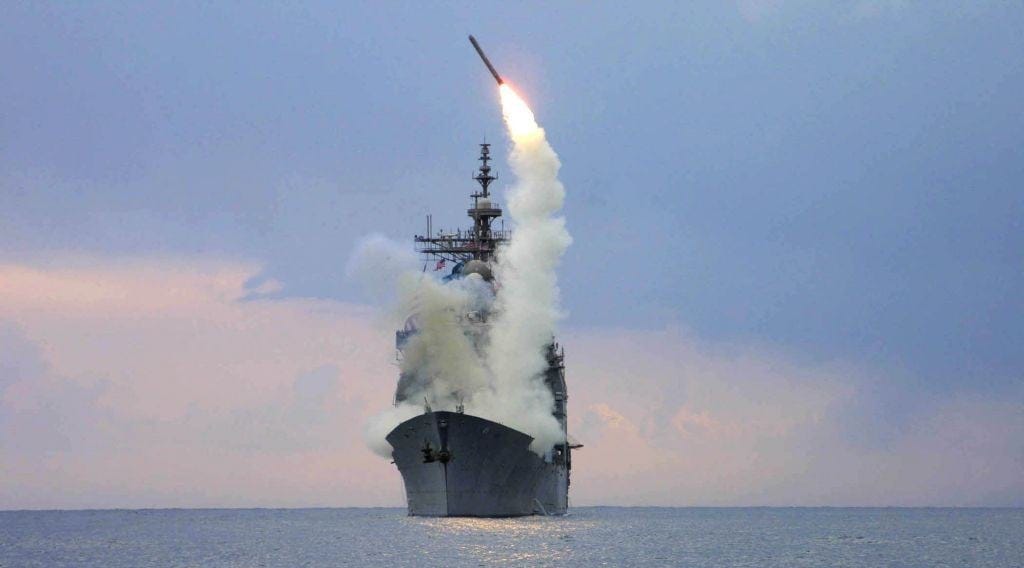
In this article I will refer to the use of long-range missiles, airpower and special forces as air campaigns, or air only campaigns. There are more precise military terms, but they are not universally agreed-upon from country to country and certainly are not in circulation with the general public.
I will believe that a conventional war against Iran is being prepared once I see multiple divisions of US troops and at least one Corps headquarters deployed to the Persian Gulf. Even then, the buildup to an invasion of Iran by conventional forces would take 2 to 4 months.
Therefore, what is occurring in the Persian Gulf is not really preparation for war with Iran, but preparation for an air only campaign against Iran.
Gaining Air Supremacy
As always, and I can't believe I keep saying this, the best analysis of a potential US Air Campaign against Iran is from a sock puppet. Binkov really is the best for explaining things in a way that is accessible to the layman and avoids hyperbole.
Current US and Israeli assets in theatre1 are as follows:

I would put up Iran’s air force as well, but there isn’t much of a point. Iran’s air force has 122 combat aircraft, all of which are 4th generation. Less than half of them have received enough upgrades to be considered competitive with US and Israeli 4th generation aircraft.

It's not much of a surprise that the United States would quickly gain air supremacy over Iran. The major threat would not be from the Air Force, but from Iran's air defences. It is a bit harder to predict the effect of the Iranian Air Defence network.
During the June 2025 Twelve day war neither Israel or the United States lost any manned aircraft. However, Israel began the war with a coordinated surprise attack that heavily undermined Iran's response. Iran will not be caught unawares this time around.
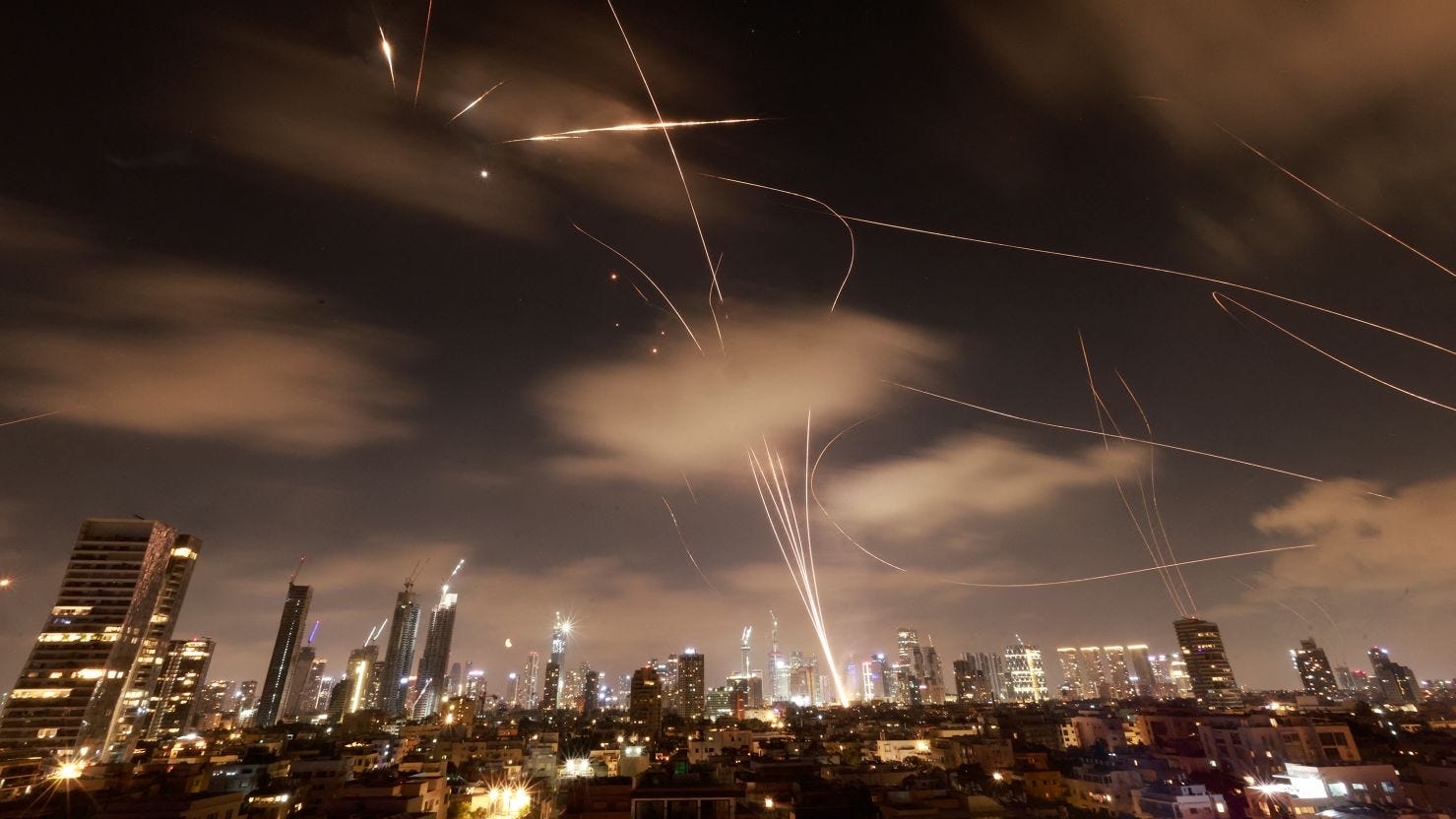
Israel claims to have destroyed almost the entirety of Iran's air defences during 2024 and 2025, making the remaining Iranian air defence threat a nonissue. I am sceptical of these claims because of the general inaccuracy of battle damage assessments from airpower campaigns. This will be discussed in the next section.
During the June 2025 campaign there were only five Israeli and one American flight missions into Iranian air space, though these did total about 1,500 sorties. These five strikes were carefully planned, supported by extensive suppression of Iran’s air defence and directed at a limited scope of targets. If a broader bombing campaign was undertaken there would likely be aircraft losses, particularly to the 4th and 4.5th generation aircraft. However, even if Iran has done an incredible job at recalibrating its air defence network since June US aircraft losses would destroy a significant proportion of the US air fleet. The goal of the air defence system would be twofold:
Destroy enough aircraft to cause political problems in an already unpopular war; and more importantly
Limit America's ability to strike at will at the assets Iran needs for its asymmetric retaliation strategy.
Effect of a Bombing Campaign
I am sceptical about how much can be achieved via an airpower campaign. Since the end of the Cold War they have been the go to policy option in the West. Across the board they have been geopolitical failures when they are not backed up by boots on the ground, or the imminent threat of boots on the ground. There tactical accomplishments have also been grossly overstated.
Air Only Campaigns as Geopolitical Failures
To begin with, here is a comprehensive list of every historical example of airpower alone (with no boots on the ground) forcing a surrender or significant diplomatic concessions:
The internet: Wait, you didn’t get around to making the list.
Me: Yes I did.
There are a few edge cases:
In the 1920s the British suppressed a tribal revolt with bombers, but this is considered a policing action and there were ground troops in the region that would have moved in on the tribal militia next.
In 1999 Slobodan Milosevic withdrew from Kosovo after a bombing campaign, but it's generally acknowledged the decisive factor in his decision to withdraw was an enormous NATO ground invasion force on his border about to attack.
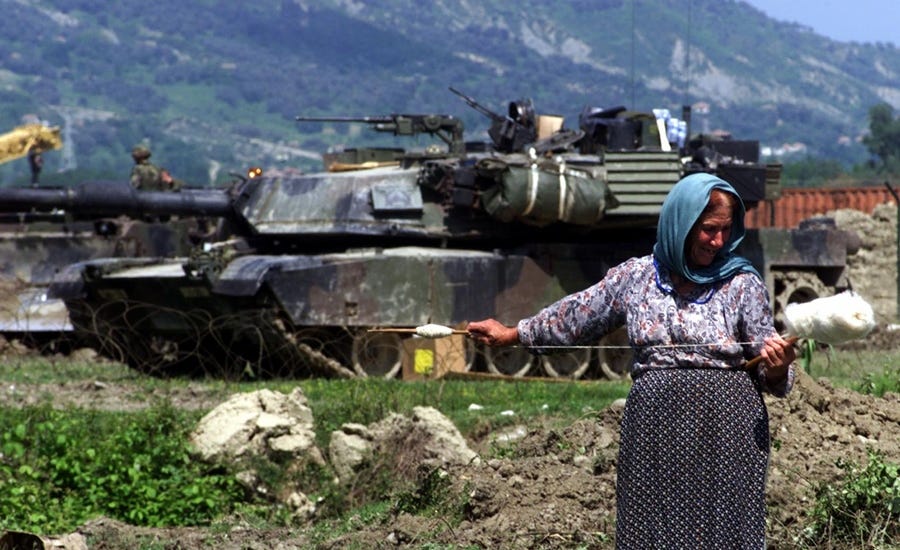
There’s a joke here about Slavic BabushkasUntil recently the June 2025 Twelve Day War was cited as an example of virtually destroying Iran's nuclear capacity from the air. However, the same sources who claimed total destruction in June 2025 are now claiming Iran is a few weeks away from assembling a nuclear bomb.
On the other hand, here is a list of countries the West has conducted air only campaigns against since the end of the cold war, where the campaign’s geopolitical objectives were ultimately not met:
Iraq (several times)
Syria
Yemen (several times)
Somalia (several times)
Iran (several times)
Pakistan
Libya
Nigeria
the Philippines
Mali
Central African Republic
Chad
Niger
Sudan
Rwanda
Djibouti
The pattern for these airpower only campaigns has been quite consistent. Either the Western power puts boots on the ground (at which point it may have a success or be dragged into a long counterinsurgency) or the air campaign is indecisive and eventually results in that Western power withdrawing from the area having failed its broader geopolitical goals for the region.
The Overestimation of Air Power
Since World War 2 the effect of airpower has always been overstated.
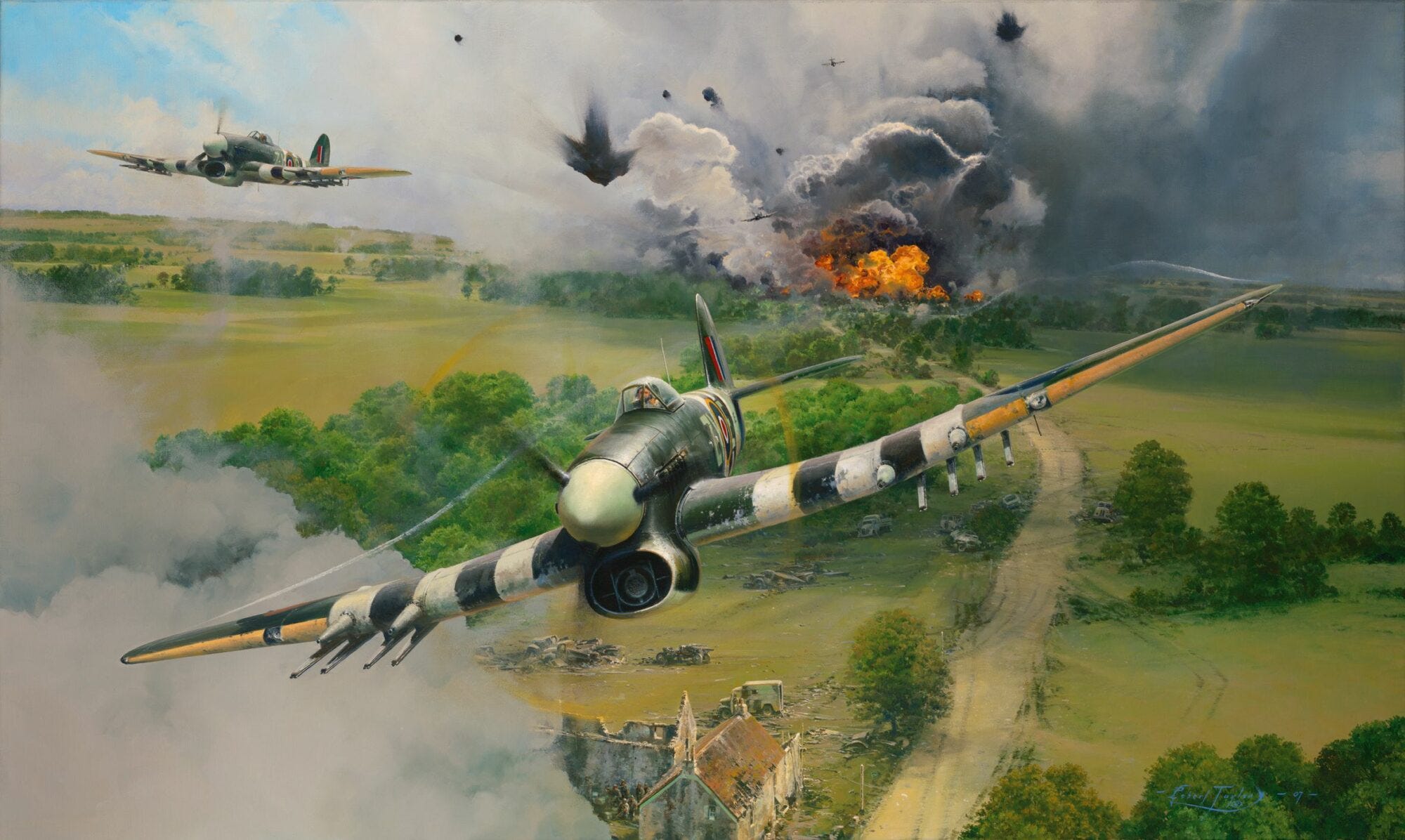
During World War II after Operation Goodwood and the repulsing of the German Counterattack at Mortain, operational research teams were able to do in-depth examination of a battlefield. They compared the number of tanks aircrew claimed to have destroyed against the number of tank wrecks on the battlefield showing signs of destruction by airpower.
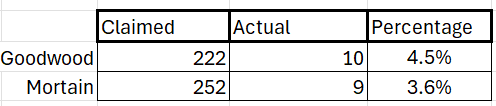
Both studies found about 4% of claimed kills were accurate. These are the two most in-depth studies of tactical airpower effectiveness during World War II, but their findings are consistent with hundreds of other less detailed studies.
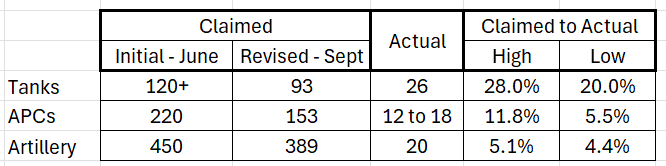
Since WW2 improvement for the claimed versus actual losses by airpower has been minimal. I could bombard you with examples, but the best recent example with good data is the 1999 NATO bombings of Kosovo. During that air campaign NATO provided an initial estimate of Serbian equipment losses. These estimates were adjusted down words somewhat in September. After NATO gained control of the battle space they discovered their kill claims were 28-20% accurate for tanks and 12-4% accurate for everything else.
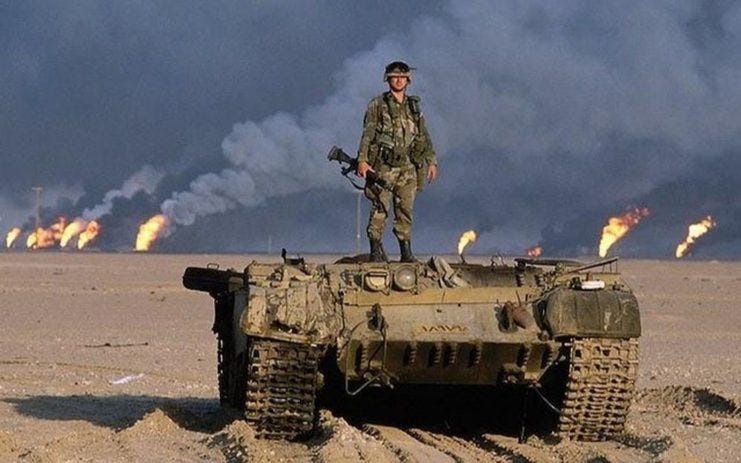
Even for the poster child of successful air campaigns, the 1991 Gulf War, the impact of airpower versus ground manoeuvre units is highly exaggerated. To quote one Iraqi tank battalion commander:
After 42 days of being bombed by the coalition Air Force I had 31 of my 33 tanks. After two hours of fighting the American army I had none.
This is why am sceptical of the claims that Israel destroyed almost all of Iran's air defence network in 2024 – 25. It is also why am sceptical that a further air campaign could visit the kind of destruction on Iran’s war making capabilities that most people envision.
The Escalation Problem
But as part 2 of the Let’s Invade Iran serries laid out, Iran’s defence strategy assumes it’s air force would be quickly wiped out.
Instead they have an asymmetric defensive strategy is based on air defences, precision missile strikes, drone swarms, cyberwarfare, naval mines and terrorist attacks.
Part of the argument for America starting an air only campaign is that there isn't much at risk to be lost.2 Major American casualties and expenses would only come as a result of a ground invasion, which America can just choose not to undertake. In fact, even if America wanted to conduct a ground invasion take them at least two months to build up the ground troops needed for such invasion.
This fails to account for both the military and diplomatic aphorism that is stood the test of time for a reason:
Military: The enemy gets a vote.
Diplomatic: You can unilaterally choose how to start a war, but not how it ends.
As discussed in my Iran series, Iran has the capability to close the Straits of Hormuz through a mind laying operation. If this occurs all of the oil production for the Persian Gulf states will be effectively cut off from the world economy. This would not only shut off Iranian production, but Iraq, Kuwait, Qatar, the UAE and to a lesser extent Saudi Arabia cannot export a meaningful portion of their oil production without tankers transiting the Straits of Hormuz. This would economically devastate Iran, but it will also cause a global economic crisis. Think of it as a geopolitical murder-suicide pact.
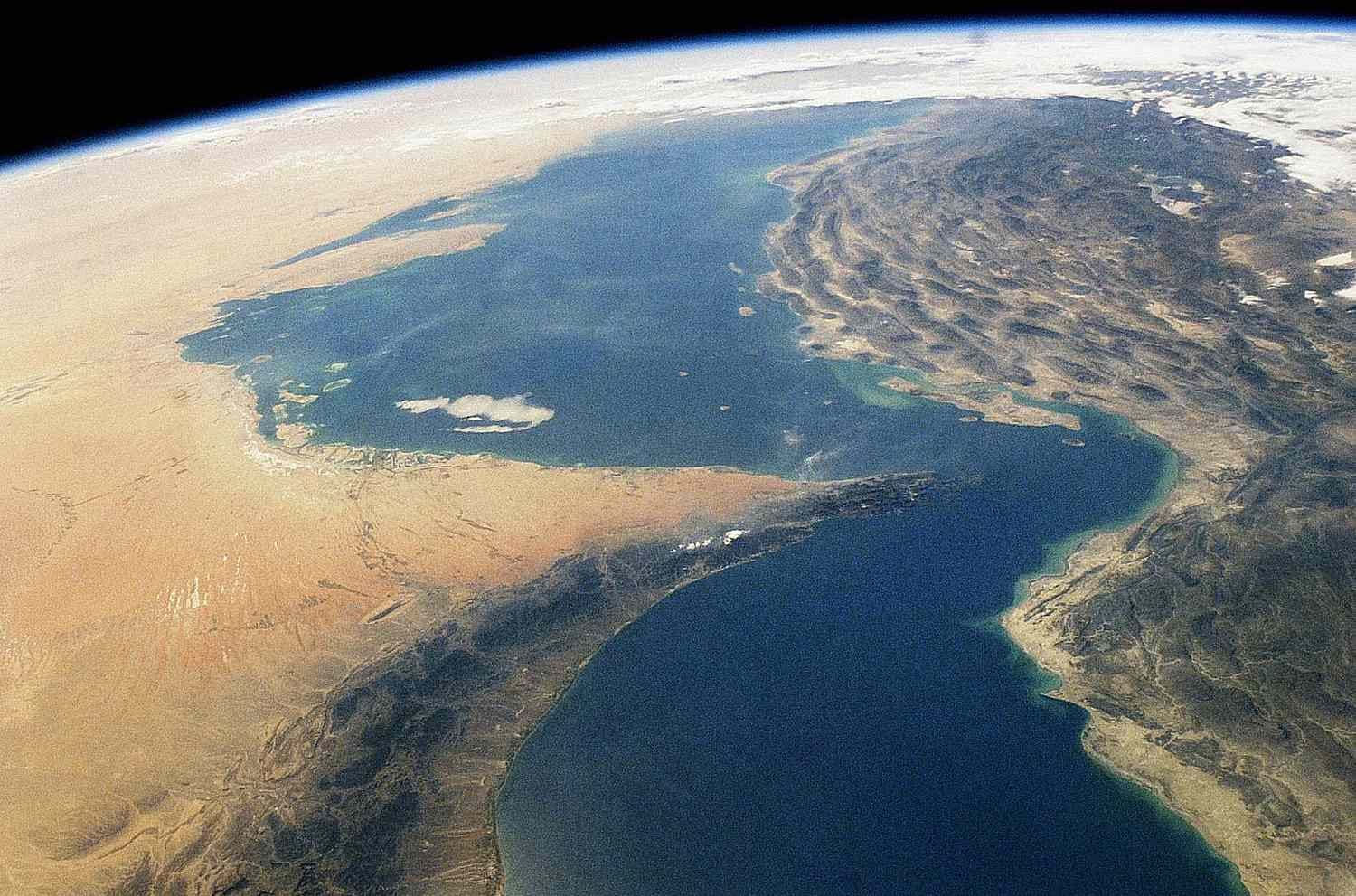
The only way to resolve this economic crisis (besides capitulating to Iran) is for America to force open the Straits of Hormuz. This is probably the naval operation the U.S. Navy is least well suited to, as they are caught in the middle of a failed mine-sweeping capability project. Although a full invasion would not be necessary to reopen the Straits of Hormuz, significant US ground troops would be needed to clear several islands in the Persian Gulf.
There is also the risk of escalation through strikes on other gulf countries, particularly on US military bases, or a successful attack on a US carrier battle group. You shouldn’t believe the hyperbolic reports of US carriers being sitting ducks due to being defenceless from hypersonic missiles. The U.S. Navy certainly has defences against hypersonic missiles.
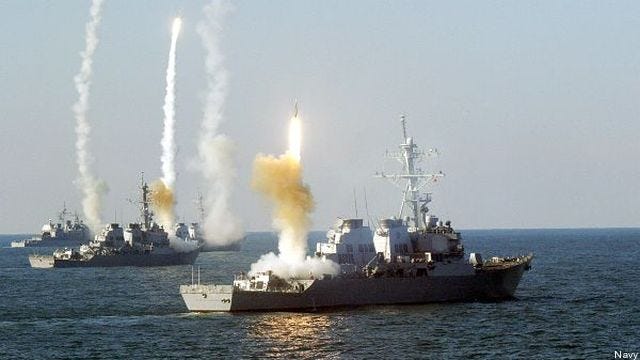
However, this is an area of warfare where there is so little real combat experience that predictions rely on comparing promises about capabilities from the manufacturers of the missiles to the promises from the manufacturers of the missile defence systems. In practice, neither the missiles nor the missile defence systems have operated as the manufacturers promised. So the outcome of a swarm of Iranian antiship missiles being launched against a US carrier battle group is highly unpredictable.
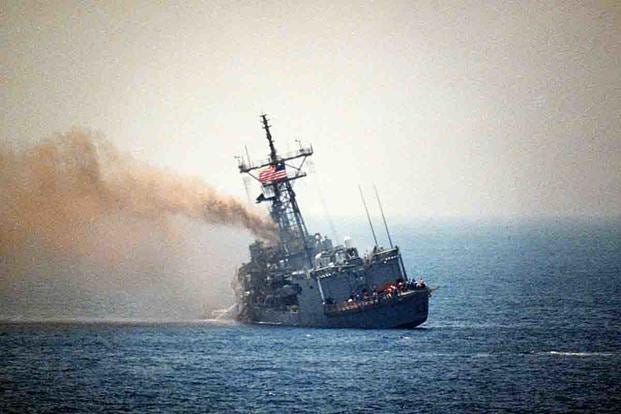
US super carriers are extremely hard to sink. It's possible, but very unlikely, Iran would accomplish this. However, I would not be surprised if Iran successfully sank 1-3 escort vessels or damaged a US carrier.
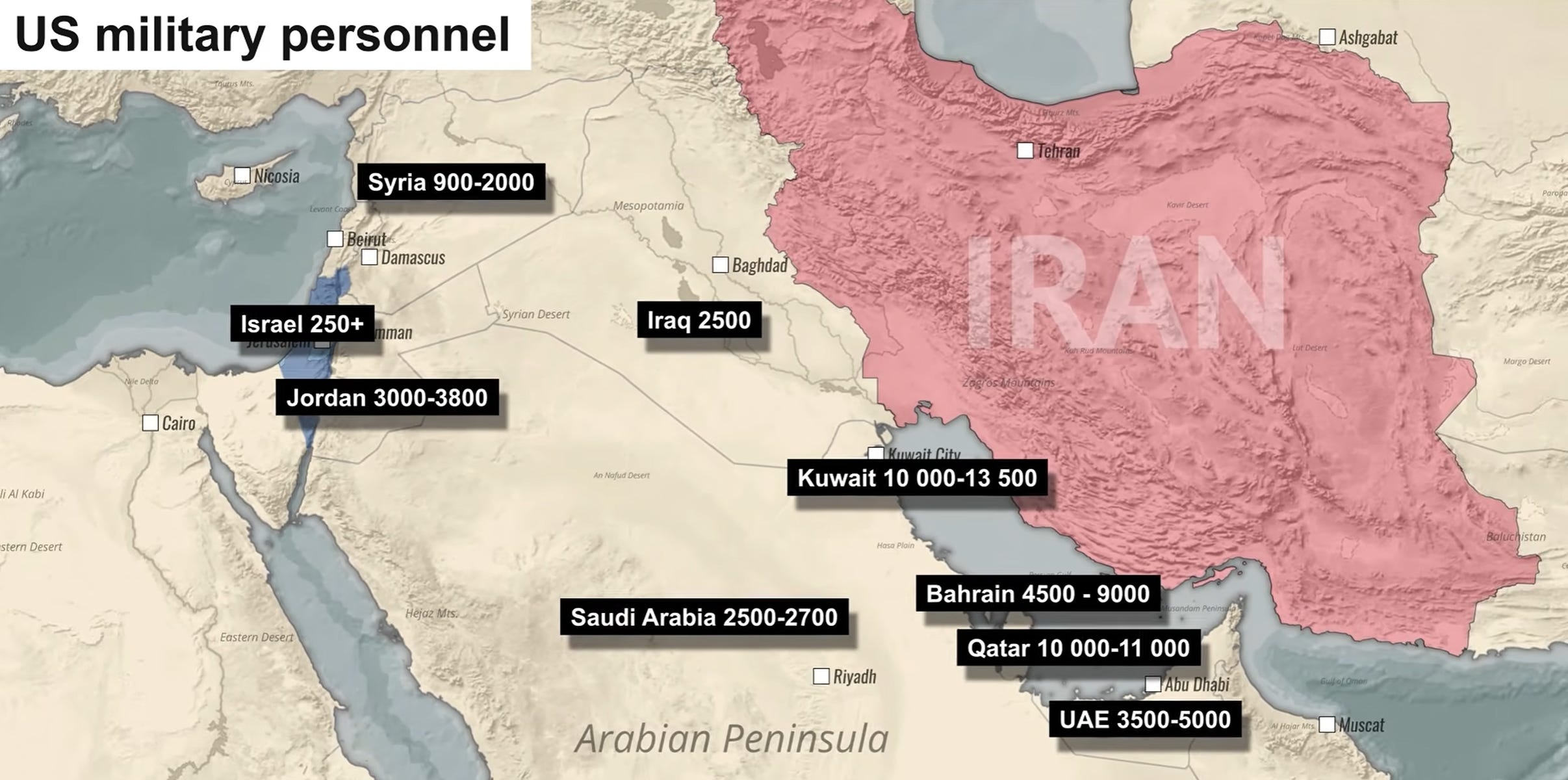
The United States also has a lot of bases in the Persian Gulf (see above) that will be much easier targets than a carrier strike group. The United States apparently has around seven patriot missile batteries protecting their bases in the Persian Gulf, and another for protecting their bases in Jordan and Israel.
They also have short range missile defences called Centurion C-RAM, which is a ground based CIWS 20mm gatling gun.
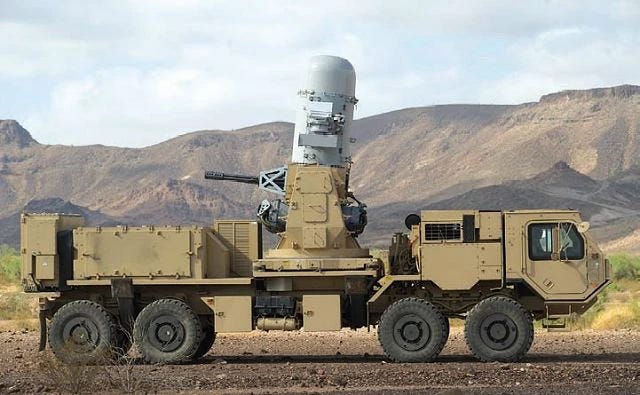
It is hard to estimate the effectiveness of these systems against a drone and missile swarm. Again there are very limited historical examples of this type of warfare. By the end of the June 2025 Twelve Day War Israel was running out of interceptor missiles and starting to take serious damage.
I have a series of questions that would give some idea of how this kind of drone and missile swarm attritional warfare would play out. However, all of those questions are either unanswerable in till we see a dozen or so of these attacks, or the answers are highly classified.
Iran also has the ‘nuclear option’ (if you’ll pardon the _expression_) of going after the much softer targets of the Gulf states that host US military bases. This would widen the war and cut off Iran from several potential allies, but it could create pressure for countries like Saudi Arabia or the UAE to expel American forces from their countries.
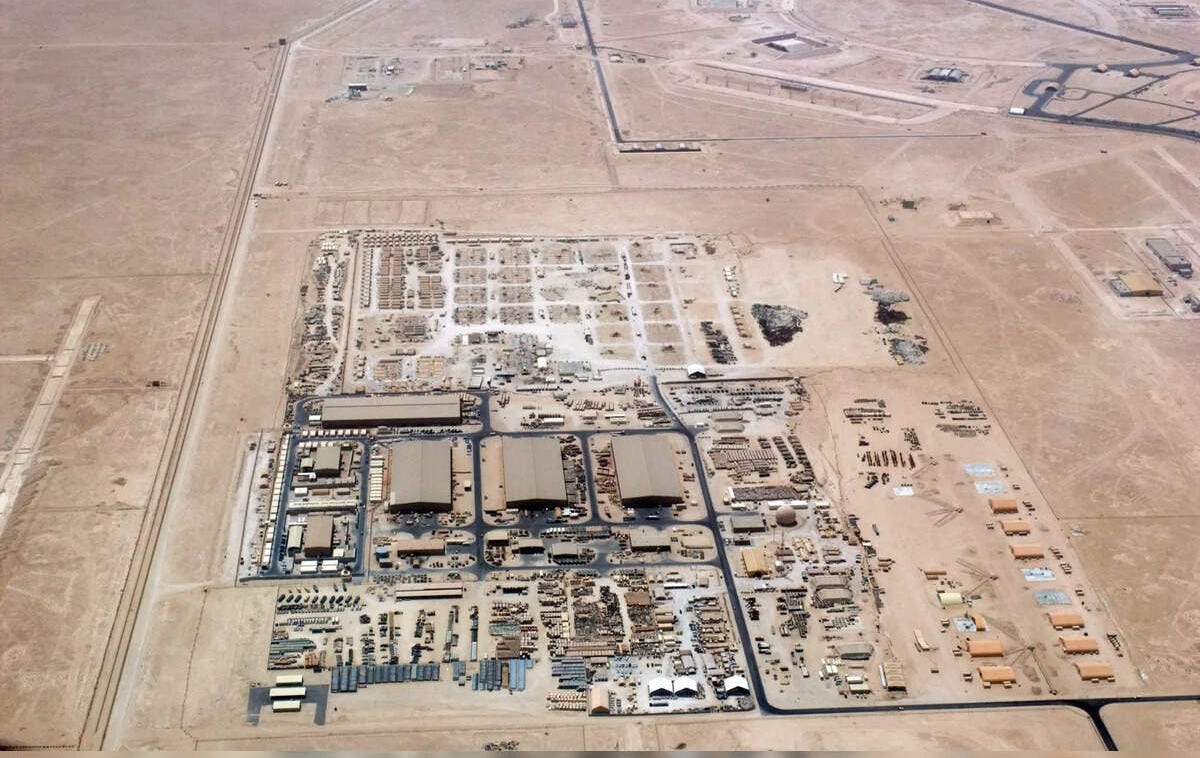
All of this is to say that an air campaign creates the potential of significant US casualties at Persian Gulf basis, U.S. Navy ships being sunk, the world economy being thrown in crisis by a shutdown of the Straits of Hormuz, or an Iranian missile campaign against US friendly Persian Gulf states. Call it a coin toss whether any of these things come to pass. However, if they do the US government may quickly find itself in a position where it's politically impossible not to escalate the war.
Conclusion
Currently the United States is not preparing for war with Iran in the conventional sense. They are preparing for an air campaign without boots on the ground.
If the air campaign is launched the United States will quickly gain total air supremacy and bombard Iran with devastating amounts of firepower. It is unlikely that United States air assets will suffer significant casualties in doing this, though I generally believe the destruction of Iranian air defence systems has been overstated.
However, this does not make an air campaign against Iran a low risk option. There are zero historical examples of air only campaigns achieving their long-term geopolitical goals, despite this being the go to Western military option since the end of the Cold War. This is because the effect of air power is generally overstated, both at the tactical level of how much equipment is destroyed, at the operational level of how much it destroys the enemy’s military capacity to resist and the political level of forcing concessions from even weak states.
Iran has a defensive strategy that assumes they will lose command of the air and come under heavy US bombardment. Their strategy is to force an escalation into a ground war. They have several tools to do this but they all involve inflicting significant enough loss of life or economic damage to make it politically impossible for America not to escalate.
I do not know whether any of Iran’s escalation strategies will succeed. No one knows.
It will probably be fine, and with some disruption, the world economy and America's status as the global superpower will continue onward.
Probably……….
I am certain that an air only campaign will not create a lasting geopolitical solution, because they never do.
US Strategic bombers are never really brought into theatre, as they often conduct global airstrikes while based in the continental US. I have assumed up to 25% of the total US bomber force would be used for strikes on Iran. With normal maintenance, training and contingency requirements this is about 2/3rds of the US bomber force that’s potentially available for operations.
For the west at least.